In this issue:
- From the chair
- Broadcast Britain
- Quentin Blake Centre now open
- Housemill news
- The Long Ferry?
- Professor Robert (Bob) Flanagan (1948-2026)
- Paul Saulter (1935-2026)
- Industrial Monuments of Greater London
- Romford Market
- Electric power generators in and around the London area
- Street transport
- News in brief
- Wapping Hydraulic Pumping Station
- Maldon, Essex — the London Tug SS Brent and a look at a bit of IA
- Books
- 345news.pdf
We've held our AGM since the deadline for the last Newsletter which was followed by Mark Pegg's lecture on 'Broadcast Britain' charting the developments of radio and television (see below).
We've also submitted our Gift Aid claim to HMRC and have received money back from the Government including an interest payment due to our delay in 'sending in' the form. These days it is all done online and it is easier than it once was.
Our walks programme is continuing; do keep an eye on the Diary section for future locations.
We are planning to hold a pub evening on 11 November and we will let you have the details as soon as the arrangements are made.
Looking further ahead we will be booking the dates for our lecture series in 2027, January to May, and if you have a presentation 'up your sleeve' or know of anyone who might speak to GLIAS do get in touch. Dan Hayton
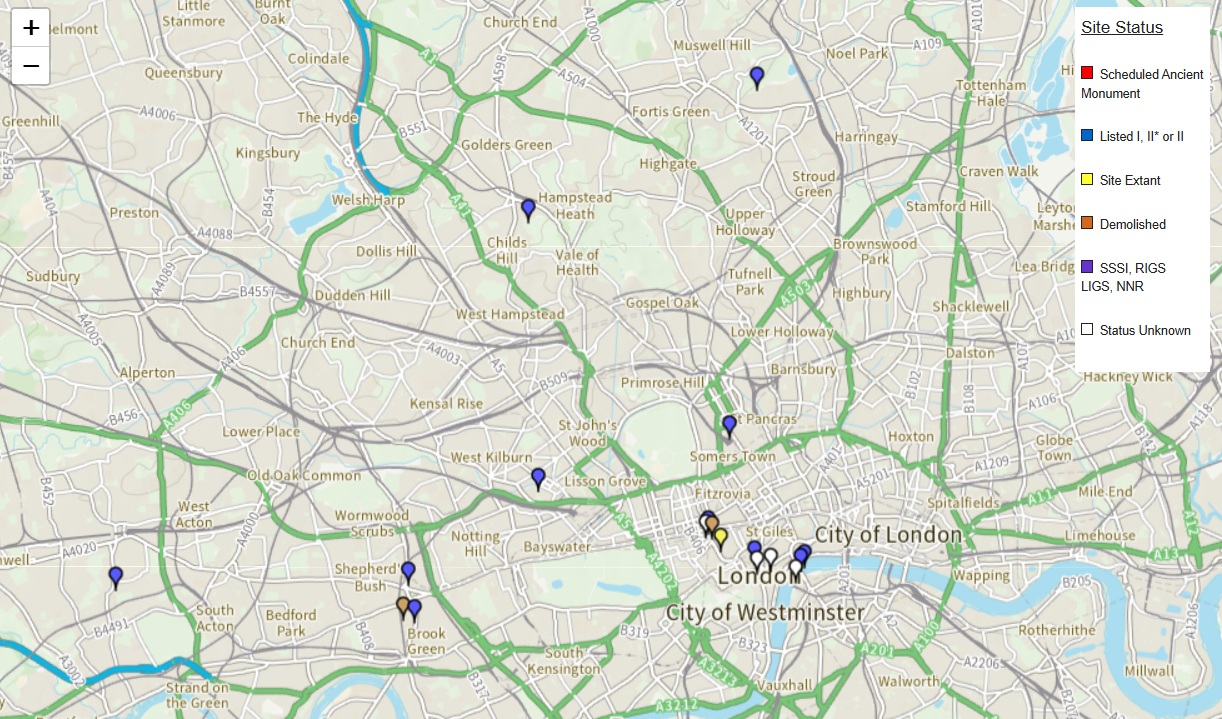
At the May AGM meeting Dr Mark Pegg gave a very interesting talk on the history of broadcasting in this country. If you couldn't attend hopefully you saw his lecture notes that were circulated by email afterwards. They are now also available in the e-papers section.
Mark mentioned the BBC Heritage Trail interactive map (www.bbc.co.uk/historyofthebbc/research/heritage-trail) which lists sites of broadcasting history.
You can also find these on the GLIAS Database if you type 'historyofthebbc' into the Quick Search. The map of the results is shown below.
The Quentin Blake Centre for Illustration is now open at the New River Head site in Islington.
There is plenty for the industrial archaeologist to see on a site that has largely been off-limits for years, so it is well worth taking a look. Access to the grounds and on-site café is free during opening hours. You pay admission to the art galleries.
There are information panels around the site which explain the former use of buildings such as the windmill base and the former engine house which houses the centre's main building.


Keep an eye out for details such as the NR (New River) stopcock plate and the 12in gauge track in the floor of the shop/main entrance. Compare this with the pictures from an open day prior to redevelopment in July 2024 (GLIAS Newsletter 335) and you can see how the site has been transformed.
Nearest tube stations are Farringdon and Angel, or take a bus that runs along Rosebery Avenue.
Quentin Blake Centre for Illustration, 1 Myddelton Passage, EC1R 1AG. https://qbcentre.org.uk/
Members will know that GLIAS has had many connections over the years with the Housemill at Bromley-by-Bow (E3). There have been regular visits, and generous financial support at various times, in particular a Calvocoressi Bursary. For those who don't know it, the mill is an 18th-century Grade 1-listed tide mill across the River Lee near Stratford, and was part of a large distillery.
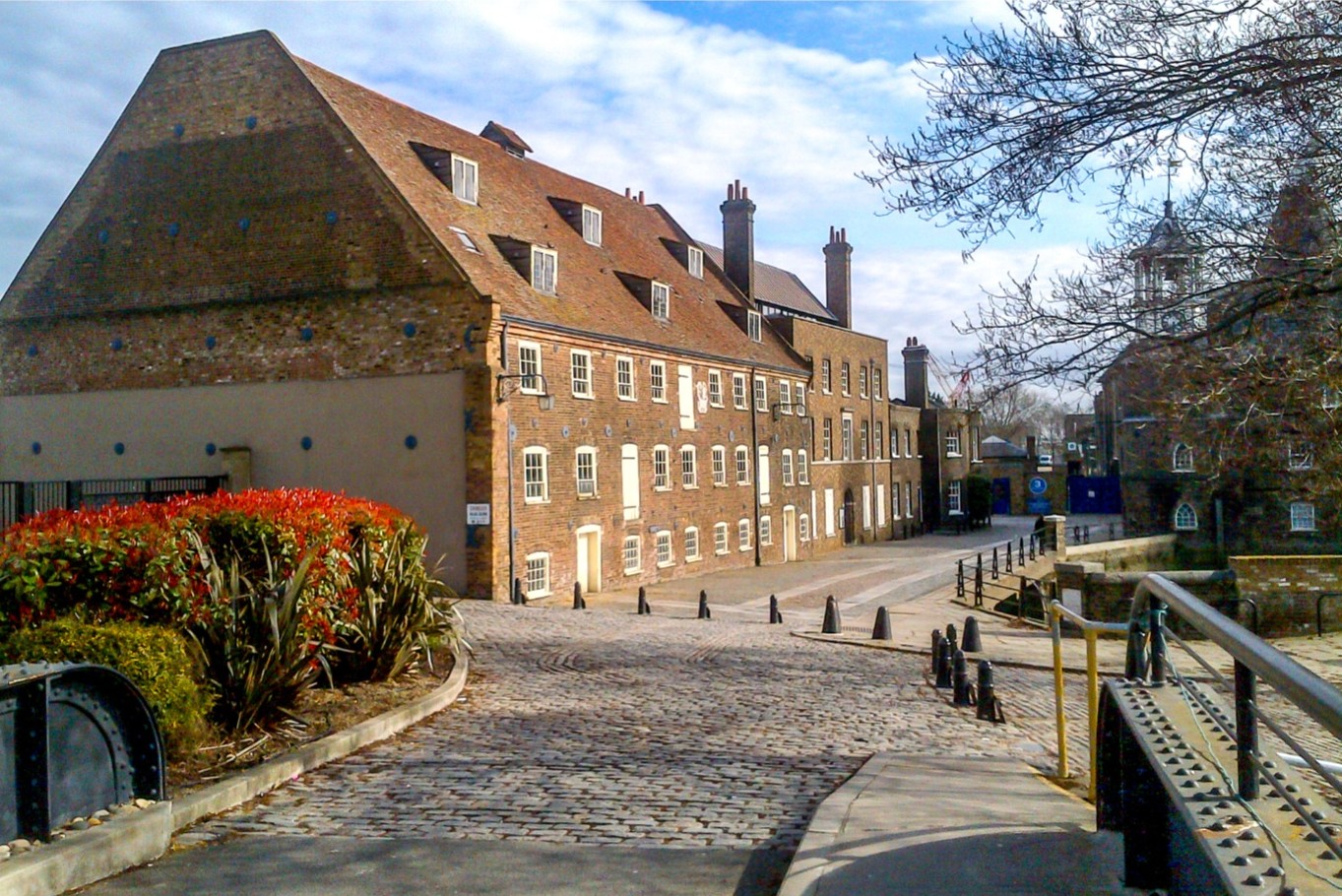
This year, the mill is celebrating its 250th birthday, and has organised a series of events over the summer.
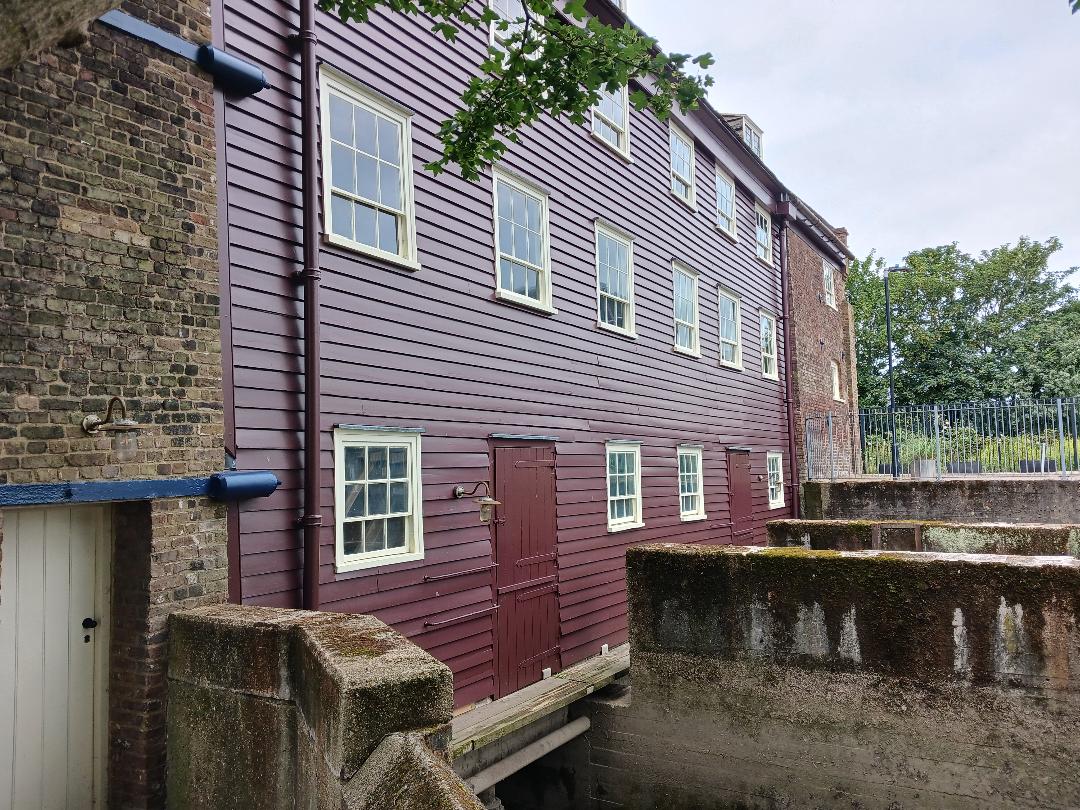
The restoration of the mill has been a major task for the registered charity which owns and manages it. In recent months we have completed the repairs and partial recladding of the rear (north) wall. The specialist builder had to erect scaffolding across the river, strip off older wooden weatherboard cladding, and replace it. The new colour, deep red, returns it to the original shade, with the paint sourced from specialist suppliers.
The Trustees are delighted with the results (below left).
-
All pictures © Geoff Cosson
The work also involved repairing some of the ground floor access doors which had been damaged by the rising waters.
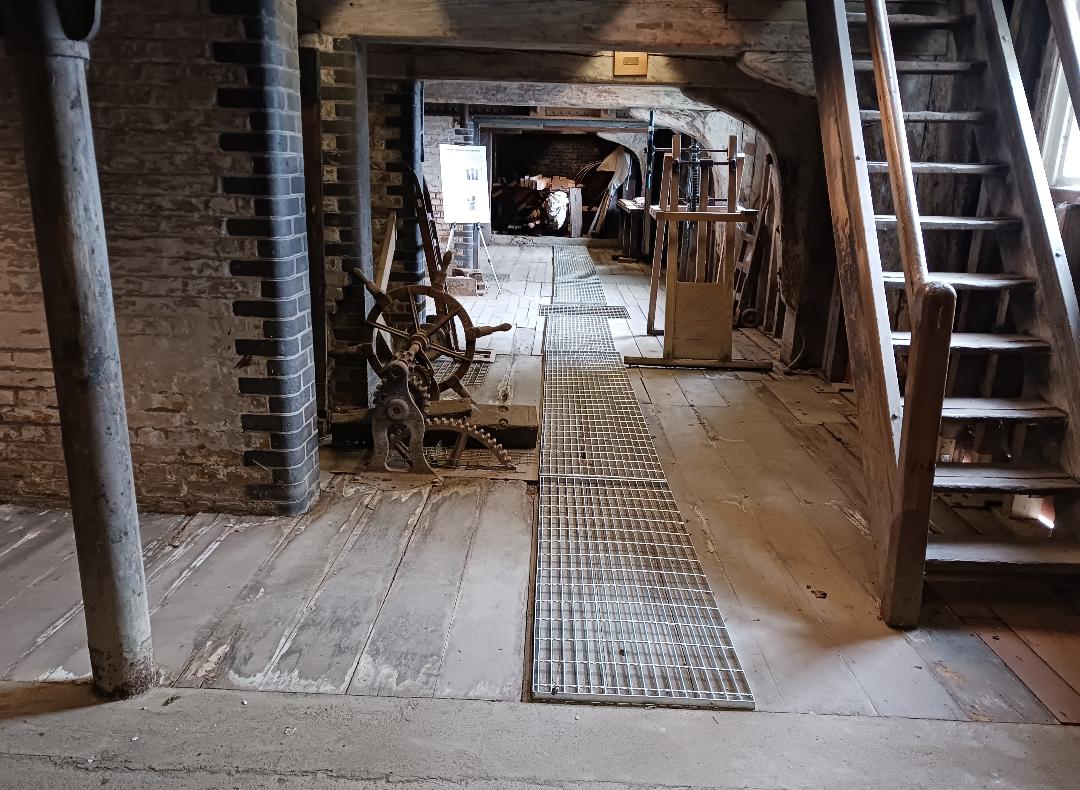
Members who visited last year may remember the problems caused by the higher water levels which have likely resulted from the London Olympics' re-routing of the river system. The Trustees have had many meetings with governmental and rivers authorities to try to find an answer, but no solution has been offered. The ground floor floods to 25-30cms at the highest tides, which has meant that floorboards have rotted and had to be replaced. Some of the original wooden trapdoors have been replaced by grills to allow floodwater to escape, and currently another grill has been laid across the damaged boards to enable visitors to still see our four water wheels (above right).
If this continues without a solution, there may be more serious structural damage, as well as having to close off the most interesting parts of the mill to visitors.
As usual, the mill is open to visitors on Sundays, and at other times for pre-arranged groups. Geoff Cosson
Web: https://housemill.org.uk/
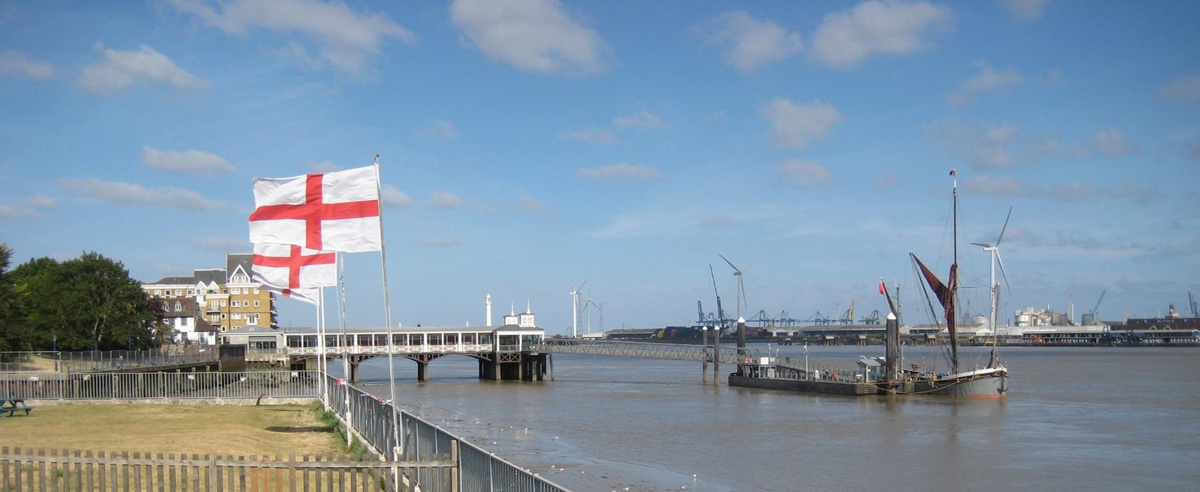
Recently Thames Clippers have been running a limited catamaran service at weekends from Tilbury and Gravesend to London. This enables people living in that area to have a day in London travelling by water. The catamaran leaves Tilbury and Gravesend (pictured) quite early in the morning and returns in the evening so it is not of much interest to people living in Greater London but some of our members in Essex and Kent might make use of the service. Advance booking is necessary.
In the Middle Ages the Long Ferry operated between London and Gravesend and was a principal means of transport.
An Internet site tells us that in medieval London, the 'Long Ferry' was a regular, tide-dependent boat service operated by licensed watermen between London and Gravesend in Kent. Before bridges were widespread, it served as the primary, heavily regulated water transport for passengers, luggage, and regional trade.
This description probably originated from the National Maritime Museum. A Gravesend local history source says that for centuries Gravesend watermen guarded their right to run a regular service up and down the river with the tide, known as the Long Ferry. Christoph Bull wrote a local history pamphlet about Gravesend ferries which was published by Gravesend Public Libraries in 1985.
Was the Long Ferry always operated by licensed watermen from Gravesend? It seems that London watermen were excluded. Perhaps someone with appropriate knowledge might be able to explain the situation? Bob Carr
Professor Robert (Bob) Flanagan (1948-2026)
Bob, who died unexpectedly at the end of May, was well known to many GLIAS members. Originally from Chesterfield he came south to study at the University of Sussex. On graduating he joined the National Poison Unit at New Cross Hospital as a NHS clinical biochemist. With interests centred on railways and military matters, he joined GLIAS in 1974 taking part in several Recording Group projects.
-
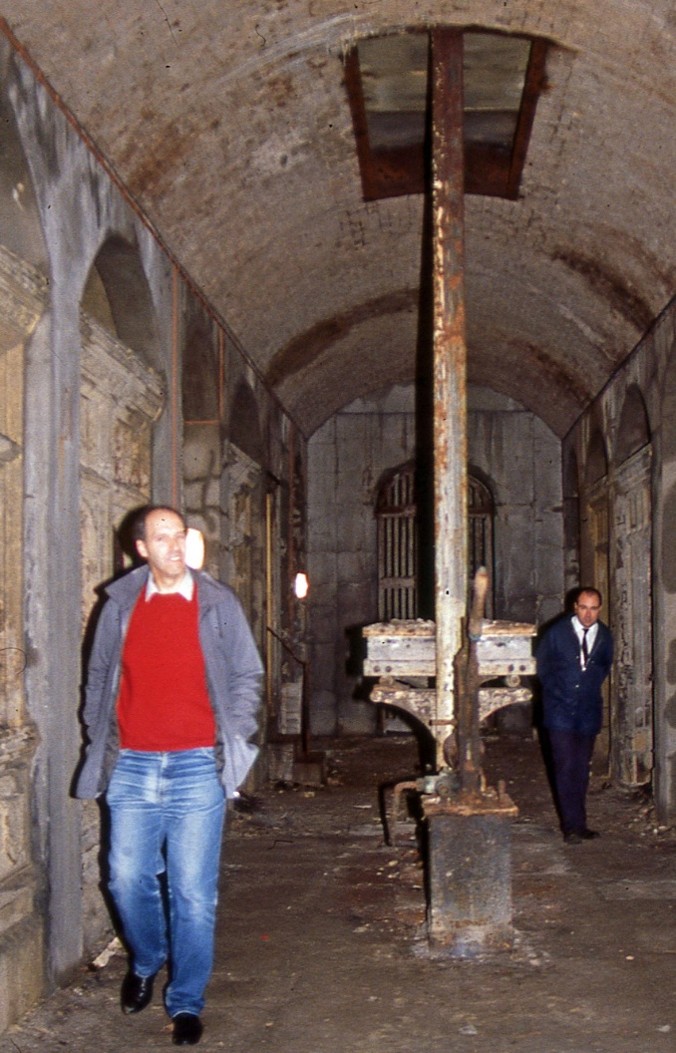
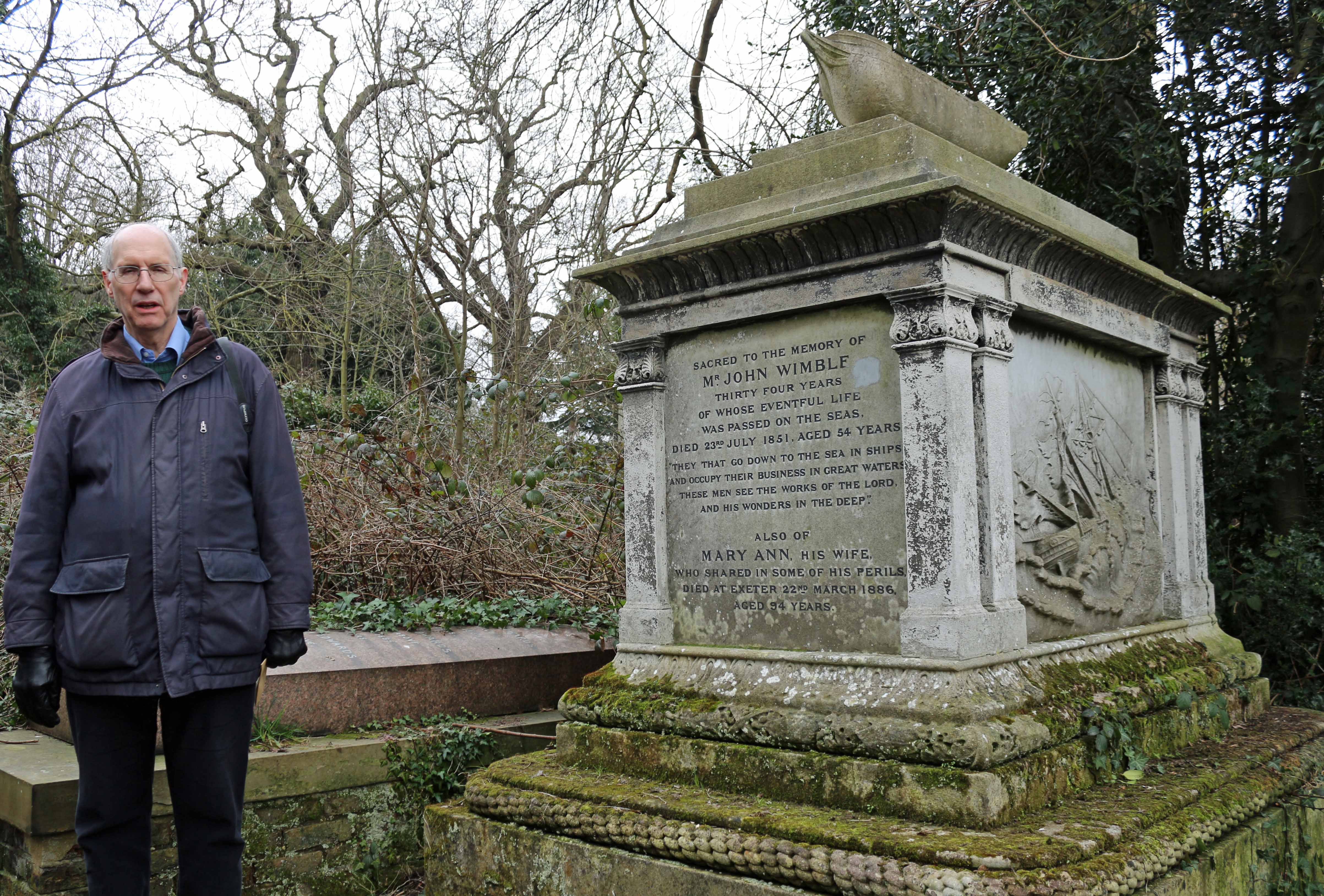
Bob and the West Norwood Bramah Coffin Lift in 1995 (left); and at West Norwood Cemetery (right)
I first met him in 1975 when I gave a lecture on my work on a new topic of High-Performance Liquid Chromatography (HPLC) at a biomedical conference being held in Kings College Hospital when he came up to me and said why is an Industrial Archaeologist giving a lecture on HPLC? From then on, we remained close scientific colleagues as well as sharing our interest in IA. We wrote a book on electrochemical detection together and jointly wrote chapters in books on Pharmacology and Toxicology. Bob progressed though the NHS clinical scientist pathways, eventually becoming a Consultant Chemical Pathologist. He had an international reputation in forensic toxicology, especially the measurement of psychoactive drugs in biofluids. Always worrying about the lack of training of forensics we set up a M.Sc. course in Forensic Toxicology based on my teaching spaces in Barts. For his efforts in doing that he was given a Visiting Professorship.
Although always busy in the poisons lab, when he and his wife Anne moved from Crystal Palace to West Norwood, he found that there was this amazing, if somewhat derelict, cemetery at the top of his street. In 1990, Bob established the Friends of West Norwood Cemetery (FOWNC) and served as its Chair for over 30 years. He led court actions against Lambeth Council who wished to close and develop parts of the cemetery. He campaigned for funds to restore many individual graves. More recently he helped raise a major Lottery grant that is being used to improve public access in the cemetery. He wrote hundreds of well researched biographical notices on occupants of graves in the cemetery, especially those with medical or science backgrounds, for the FOWNC newsletter, some of which were later included in a FOWNC book.
He gave several talks to GLIAS that included me getting him to speak on death at SERIAC. He also led a number of GLIAS tours of IH relevant graves in the Cemetery. These included the totally memorable occasions when he just happened to have keys to the catacombs in his pocket. Here some 3,000 coffins are placed on shelves and very importantly the 1837 hydraulic coffin lift by Bramah & Robinson survives.
Olwen and I regularly met with Bob and Anne for dinner in London restaurants, the last being just ten days before his death when we discussed two court cases in Wales where he was an expert witness and then when to seek a grant to restore the coffin lift. David Perrett
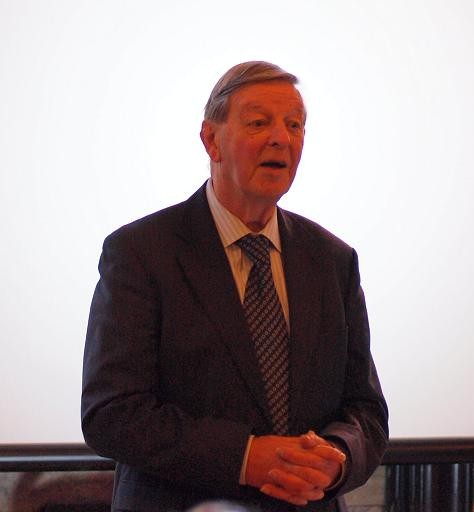
Paul was known to many in GLIAS, the AIA and the Newcomen Society for 'Heritage of Industry' and 'City Safaris' as well as taking specific society tours to look at historic and contemporary industry.
Paul completed his National Service before attending Oxford University and had a career stretching from the CEGB to Chambers of Commerce in Paris and Manchester.
Paul's connection with the West Country led to an early Industrial Tourism venture 'Cornwall of Mine', featured in 'Wish You Were Here' with Judith Chalmers. Later on the scope enlarged, with 'Heritage of Industry', to cover Europe, Egypt, Australia, New Zealand and the USA with tours for Societies and also the long weekend format of 'City Safaris'. Many GLIAS members have taken part in trips with Paul which, as well as the 'educational' visits always included a variety of good food (and drink).
A Requiem Mass was held at St Paul's Knightsbridge on Monday 13 July, where, at one point in his career, Paul was administrator; family and members of the societies that Paul was involved with attended.
Industrial Tourism is appearing more often in the news and social media these days but it was a great pleasure for many of us to have been involved with Paul in exploring the industrial cities and regions of the world. Dan Hayton
Industrial Monuments of Greater London
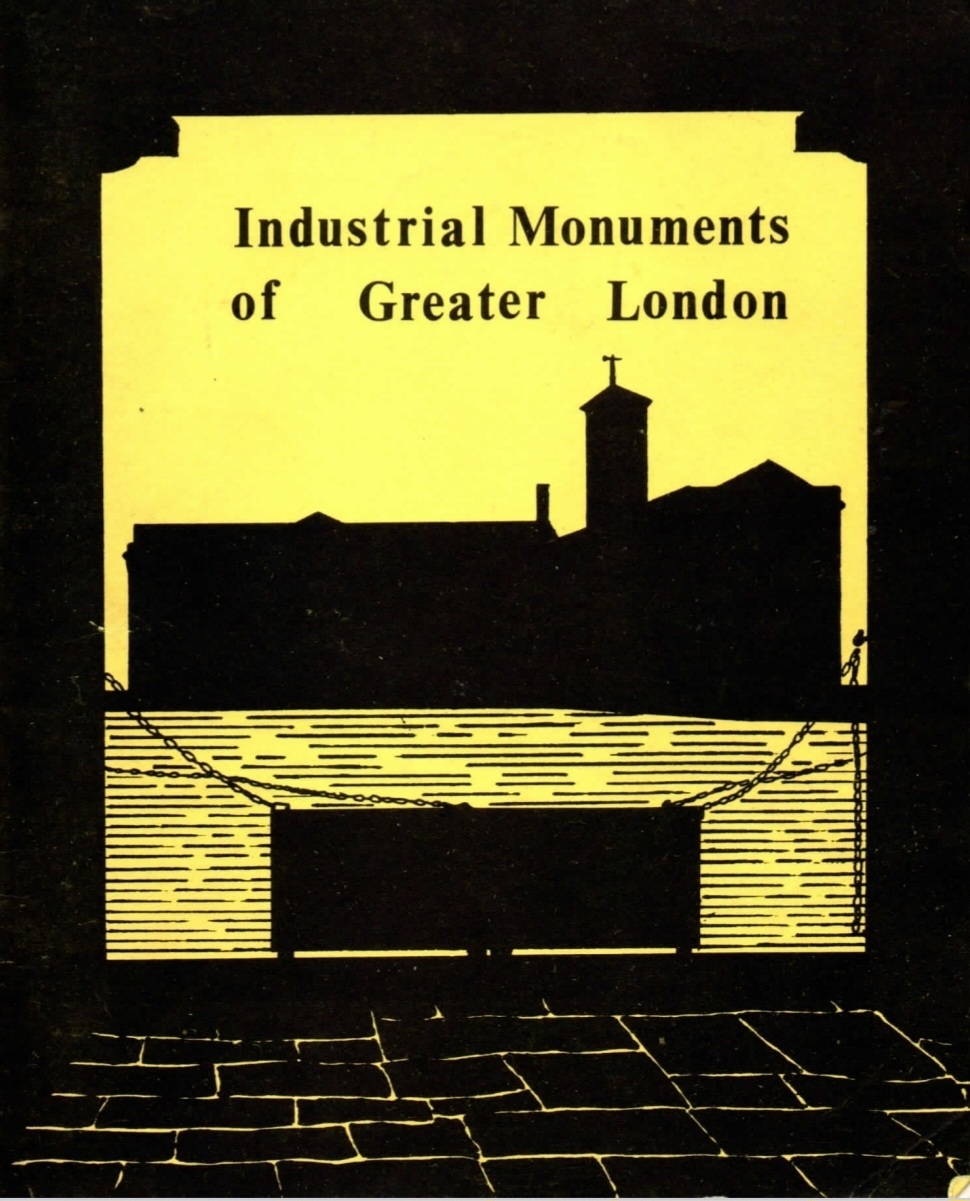
A scan of the Thames Basin Archaeological Observers' Group's 1969 survey 'Industrial Monuments of Greater London' can now be downloaded from the GLIAS website (under the e-papers tab). This has been produced from a pdf scan of the original printed booklet provided by GLIAS member Michael Bussell, who extends grateful thanks to Newsletter Editor Robert Mason for digitally reformatting it into the present version.
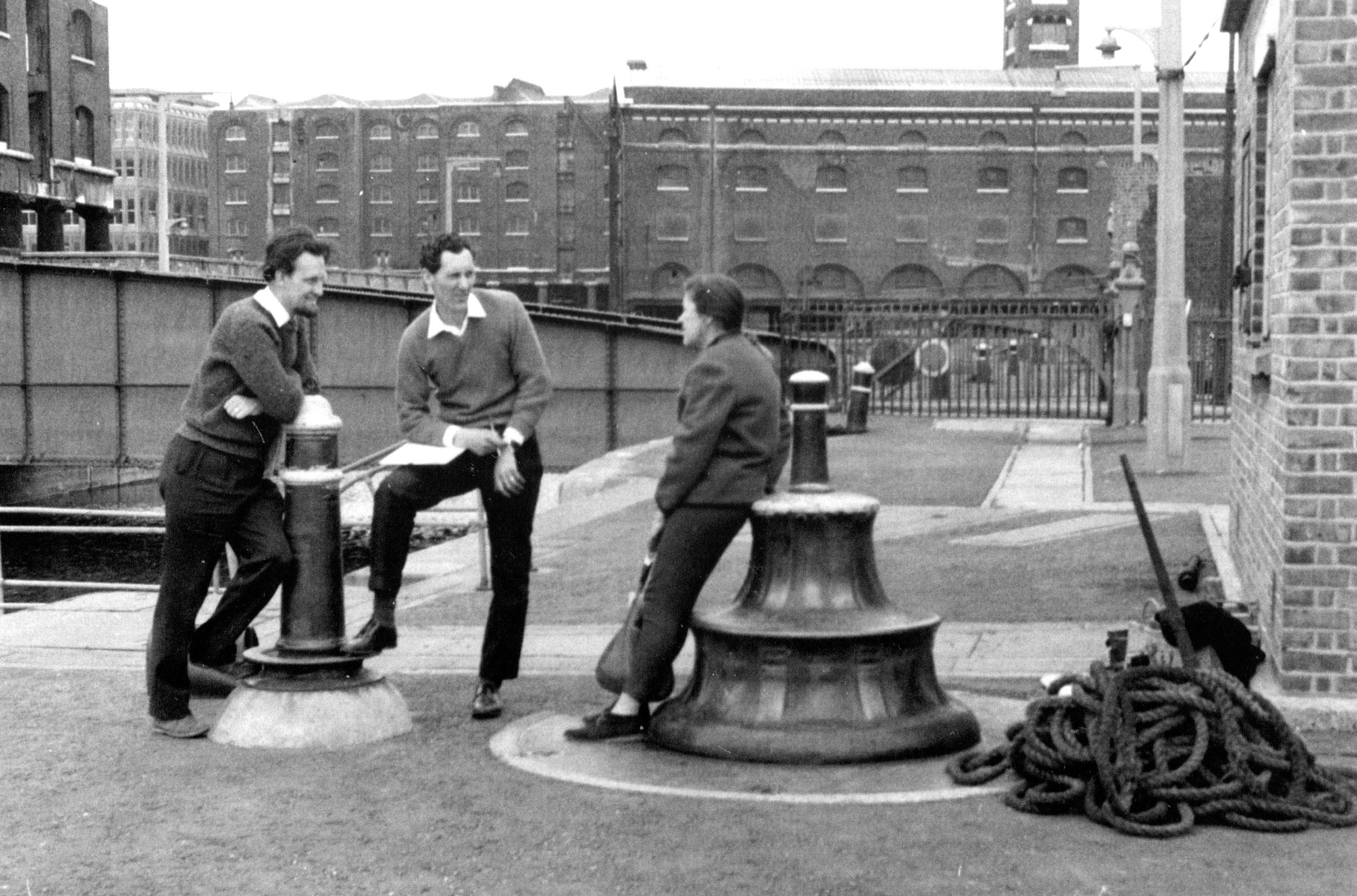
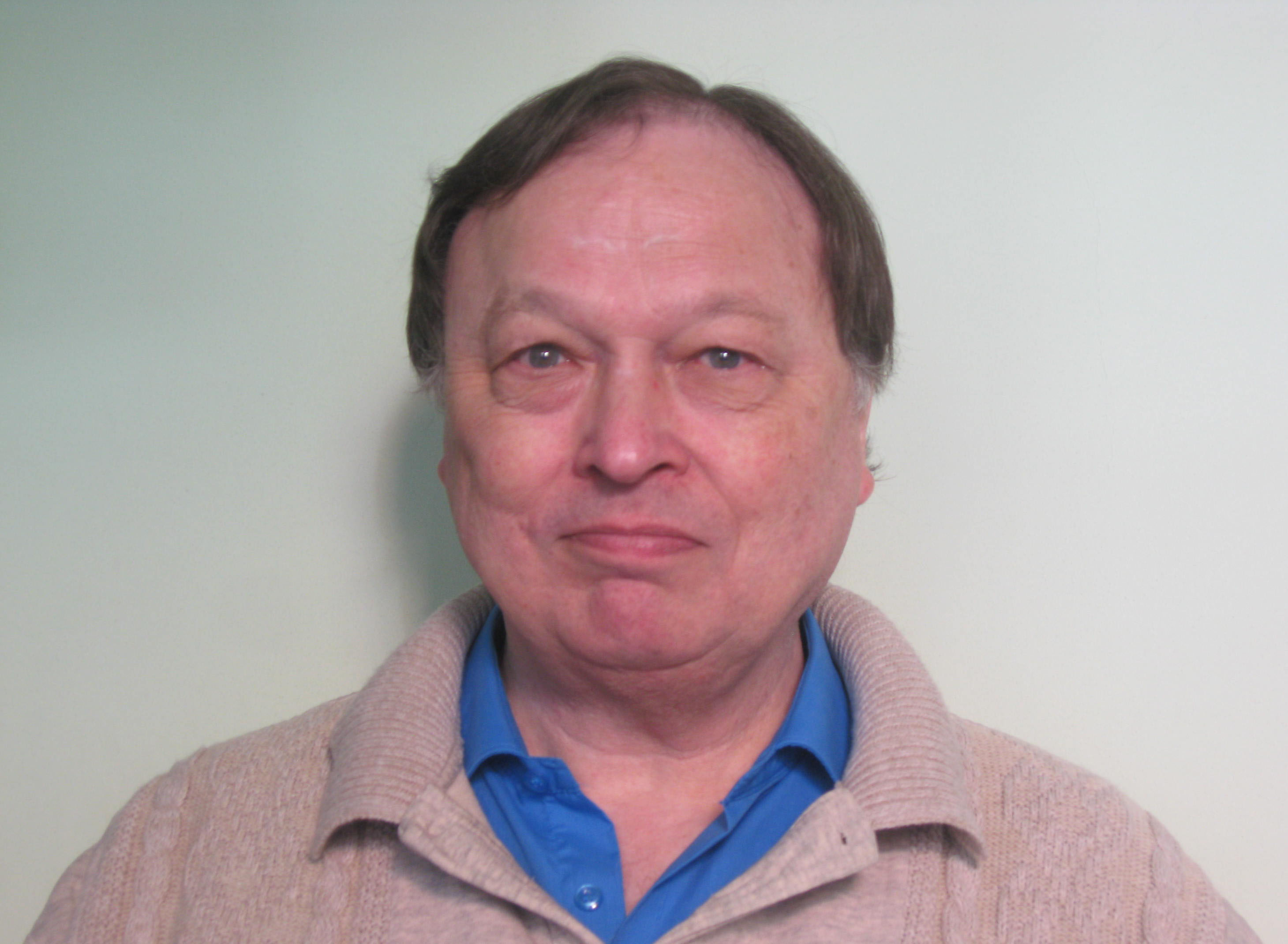
Michael was one of the three original booklet compilers, along with the late John Ashdown and the late Paul Carter (first Hon Secretary of GLIAS). The original print run of about 700 copies sold quite quickly, and no reprint was produced so this is probably the first chance for many to see this pioneering work.
-
(left) John Ashdown and Paul Carter at St Katharine Dock, May 1966; (right) Michael Bussell
The layout of the booklet's 64 pages has been retained, but with no editing or updating of entries. Please bear in mind that the booklet was compiled in 1969, when knowledge of London's industrial archaeology was still at a fairly formative stage. Since then, many if not most of the sites listed have undergone change or disappeared entirely, while many more have been identified, and historical and archaeological studies have assisted increasing awareness of the significance of London as an industrial city.
A fuller account of the booklet's making appeared in GLIAS Newsletter 154 (October 1994) and in Michael's essay 'The early days of GLIAS' in Journal No 17 (2019).
You might have expected the market in Romford to have been done away with by now, swallowed up by some of the enormous shopping malls. So it is a pleasant surprise to find that if anything the opposite has happened. Romford still has a large and flourishing open-air market which is held on three days a week; Wednesday, Friday and Saturday. True there are no longer cattle pens and sheep are no longer bought or sold but it looks as if there is still a healthy range of stalls of various kinds to be found on market days.
Romford market is of ancient foundation, it dates back to 1247 when King Henry III was on the throne. The town had the exclusive right to hold a market, nowhere else was allowed to set up another market within a day's sheep drive of Romford. This ancient foundation was made use of recently when it was proposed to establish Smithfield Market at Dagenham Dock. It was pointed out that Dagenham was only 4 miles from Romford. One day's sheep drive is 6 2/3 miles and the idea of markets in Dagenham was abandoned. Bob Carr
Electric power generators in and around the London area
Prompted by Bob Carr's mentioning the Edmonton facility (GLIAS Newsletter 342) this note, from internet information, lists active sites in and around London. It excludes any generating for in-house use (eg Greenwich, Transport for London; Harrods, Knightsbridge). MW capacity shown sometimes varies between websites.
| Capacity, MW | Where — total 18 locations | Source of power |
| London North East | ||
| 43 | Tilbury Green Power, Essex | Biomass, waste wood, including domestic. 'One of the largest biomass plants in the UK'. Ash to landfill |
| 3.8 | Tilbury LCY 2, Essex | Renewable electricity 11,500-panel, rooftop solar panels, Amazon Fulfilment Centre warehouse |
| 732 | Coryton Power station, Essex | Power station. Combined Cycle Gas Turbine (CCGT) gas-fired plant |
| 11.6 | Pitsea Landfill, Essex | Gas power station. 'landfill gas is collected by a network of pipes and since 2001 has been used to power generators producing 16.2 MW of electricity' |
| 38 | Ockendon Landfill Solar Farm, Essex | Solar farm, 'the third largest in the UK, includes more than 100,000 solar modules ... 201 acres' ... 'array on a restored landfill area' |
| 99 | Clay Tye BESS, near Upminster, Essex | Solar farm with battery energy storage system |
| 55 | *Tottenham Eco Park, Edmonton | 'Waste from several London Boroughs' |
| London West | ||
| 50 | Slough Heat & Power | 'Produce electricity and heat through burning waste-derived fuels made from various sources of municipal solid waste, commercial and industrial waste, and waste wood'. |
| 30 | Lakeside Energy from Waste. Colnbrook, Berks | 'High Temperature Incinerator' 'over 450,000 tonnes of residual waste per year' |
| London South and South East | ||
| 26 | Beddington Energy Recovery Facility | 'The facility provides the South London Waste Partnership and regional businesses with a safe and cost-effective alternative to landfill. The facility is permitted to treat c.347,000 tonnes of non-recyclable waste each year.' (or 'non-hazardous residual waste') |
| 45 | Purley Way, Croydon | 'Open-Cycle Gas Turbine facility' |
| 35 | S E London Combined Heat & Power, Lewisham | '400,000 tons of non-recyclable waste p.a.' |
| 72 | **Belvedere Incinerator, Bexley | '585,000 tons of waste a year' |
| 792 | Damhead Creek, Kent | Power station. Combined Cycle Gas Turbine (CCGT) gas-fired plant |
| 12 | Malmaynes Hall, Stoke, Kent | Solar photovoltaic (PV) farm |
| 1,517 | Grain, Kent | Power station. Combined Cycle Gas Turbine (CCGT) gas-fired plant |
| 49.9 | Kemsley Energy From Waste, east of Sittingbourne, Kent | 'Combined heat and power facility that processes up to 657,000 tonnes of residual waste' (Steam heat to nearby industry) |
| 22 | Tonge Corner Solar PV Park, Kent | Solar PV (photovoltaic) panels |
| 3,633.3 | Total all 18 locations | |
| 3,041 | Total of 3 CCGT Power Stations (83.7%) | |
| 592.3 | Total the other 15 sites (16.3%) |
*Edmonton. Bob Carr mentions in Newsletter 343 (February 2026), that it is 'well past its best before date'. And describes it in issue 142, October 1992. In issue 138 June Gibson says 'Built in 1970 to last 25 years'.
**Belvedere is river-served. About 60% of the waste received is transported by barges and tugs from the four Western Riverside Waste Authority (WRWA) boroughs, Hammersmith & Fulham, Kensington and Chelsea, Lambeth and Wandsworth, plus the City of London. The remainder is delivered by road from other London boroughs and commercial waste contracts. David Thomas
At Manor House there is a bus and tramway building at 279 Seven Sisters Road (TQ 321 875) which used to house offices and at the back there was access to the site for tram cars. Until about 1990 this building was attractive; it was ivy clad and there was a splendid array of Vicwardian, early 20th-century, clerestories on the roof. From firsthand information people who planned timetables worked in this building. Built in 1898 for horse-drawn tramways it is now called Ivy House.
Later, however, the clerestories were removed. It seemed a terrible penny-pinching economy. However, at this date there was a great fashion for making buildings more environmentally friendly so to be charitable it might be said that the clerestories were removed on environmental grounds. Since tram cars did enter at the back of this site, at least in small numbers, there were probably motor converters somewhere in the buildings here.
From the mid 1930s trolleybuses became numerous in this area and initially there could have been motor generators hereabouts to provide direct current to power them. In the main trolleybuses used 550 Volt DC produced by mercury arc rectifiers but some older substations still used motor generators until they were phased out.
There is an erroneous claim on the Internet that in 1898 the then tramway horses were stabled on the top floor of Ivy House and they were taken to the top by two large wooden lifts. This story only applies to an example in Southampton and yet it has been widely propagated and applied to other places. Here is an example of where AI can be dangerous.
If we examine an aerial view of Ivy House we can see that at the back there is a long brick shed, clearly to house tramcars, with a decent probably clerestory roof, and with four ventilators on top. This building is similar to the tramway substation at 377 Camden Road (GLIAS Newsletter 344, p9). It is fairly obvious that any motor-converters would have been housed in this building.
The top floor of Ivy House as built would have been well lit and perhaps used for a drawing office or fairly prestigious purposes. There are anecdotes of people who went to Ivy House in post-war days for an interview regarding promotion to more senior positions. Ivy House was being used for quite executive purposes by London Transport so it would appear that it was a better building for this purpose than many others available to London Transport. LT still had some accommodation at Ivy House in 2012.
In recent years Ivy House has been used as a hostel but it is now being converted into flats for sale. Bob Carr
 The first part of the new London Museum (formally the Museum of London) is scheduled to open in Smithfield Market on 28 November this year.
AJS motorcycles were made in this country from the 1900s. In 1931 the firm was sold to Matchless Motorcycles who were in Woolwich, and Matchless continued to manufacture AJS there until the 1960s. Since 2025, although the brand is still British and the motorbikes appear traditional, AJS motorcycles are now manufactured in China. An AJS Scrambler was noted recently at Trinity Buoy Wharf.
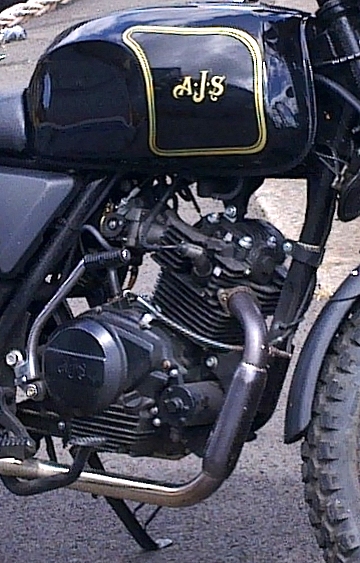
Motorcycle enthusiasts might be able to make some corrections to the above information. MG motor cars are now made in China. Bob Carr
Wapping Hydraulic Pumping Station
The public utility that was the London Hydraulic Power Company closed on 30 June 1977. At its height LHP supplied water at a guaranteed pressure of 750 psi via network of 184 miles of 2" to 10" cast-iron pipes under London's street to thousands of machines. GLIAS members visited many LHP Pumping Stations in the early 1970s. The last of the company's stations to actually supply hydraulic power was Wapping. The engineer there was Don Donnachie, who lived with his family in the company's house on site but fronting onto Wapping Wall. It faced directly the Prospect of Whitby pub. GLIAS last visited the working station on 20 November 1976.
Shortly after the system closed Denis Smith and myself visited the company offices then in Renforth St, Rotherhithe to inspect the archives. On that occasion Denis and I were given various items of company advertising including the large map of the system. The archives were later transferred to the London Archives.
After closure parts of the pumping station at the rear were then stripped out by the Women's Playhouse Trust, an arts charity, and used for art exhibitions by many internationally renowned artists. The diesel pumps were not removed and for many years the engine room was a 'fine dining' restaurant with tables between pumps. In 2013 the gallery and restaurant closed. Since then the pumping station was closed except for occasional use for filming.
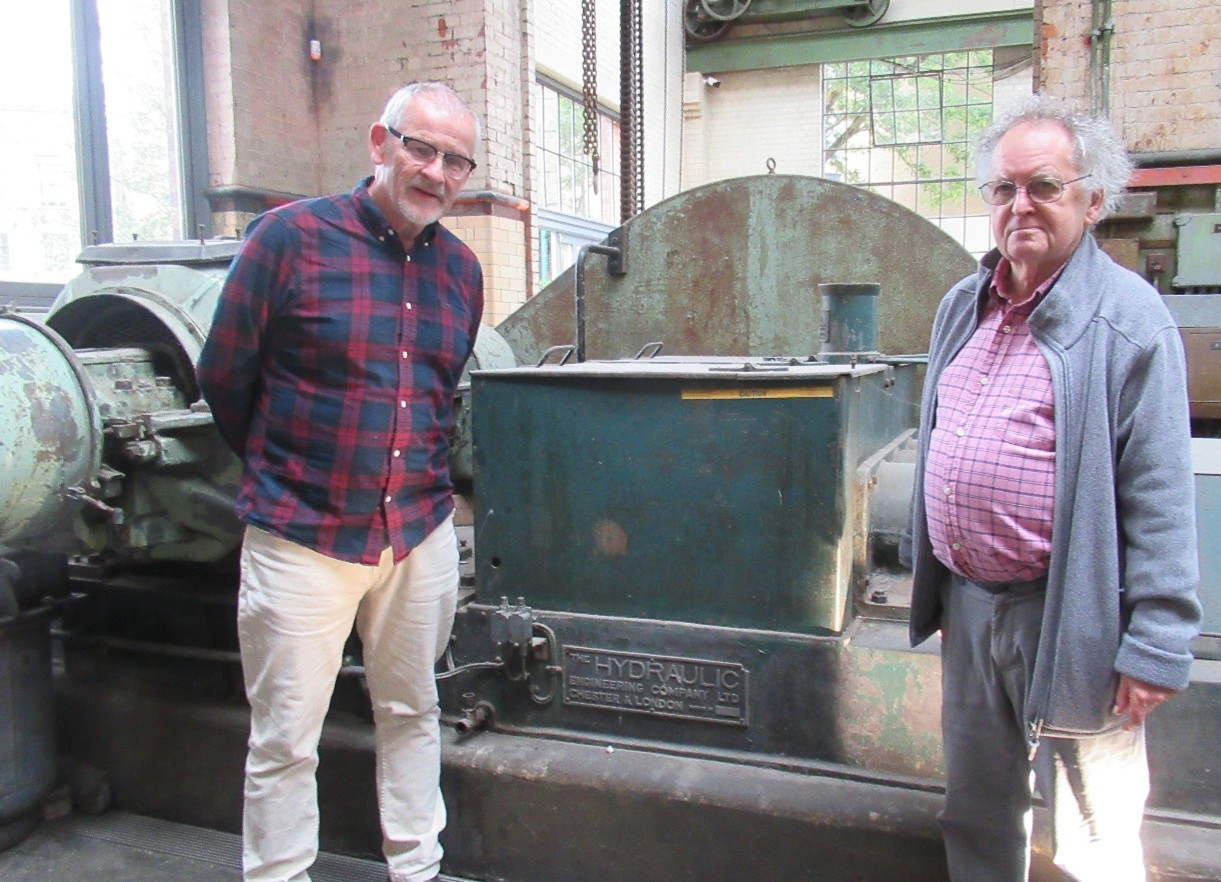
The building is now to be run by the Glass House Foundation, who plan to sensitively restore it and open it for suitable events. To launch this project an open event aimed at local residents was held on 5-6 June. To tell the Foundation of GLIAS's long standing interest in the site I went along and gave them a copy of the very detailed GLIAS report on the site written by Tim Smith and Dave Gunning in 1998/99. On showing the organisers my archival items they said they had not seen them before but a few minutes earlier another visitor had shown them the system map. That visitor was pointed out to me so went to talk to him. Much to my surprise he was Mr Donnachie's son, Gerard and his daughter Matilda. They had travelled down from Hertfordshire to see what was happening at the pumping station. Gerard and his brother had been brought up in the engineer's house and the pumping station was their playground. Matilda had also spent much time playing in her grandfather's home. Both Gerard and Matilda were able to recall much about life in the station including playing on the roof and around the water tanks. The station was manned 24/7 and a night watch mounted so that Mr Donnachie could be woken immediately in case of problems on the network. Gerard recalled a tale that his father had forgotten to give a talk. In fact he was to give a GLIAS lecture but our audience was so knowledgeable that together members gave his talk on hydraulic power. The event is fondly remembered in his family. Although not open to all the three of us climbed up to the roof tanks for their memories' sake. They showed me a number of family items, such as the letter saying that after removing some of the equipment Mr Donnachie was to be made redundant on 18 November 1977. A further letter said that they could continue living in the house when it was taken over by the LDDC.
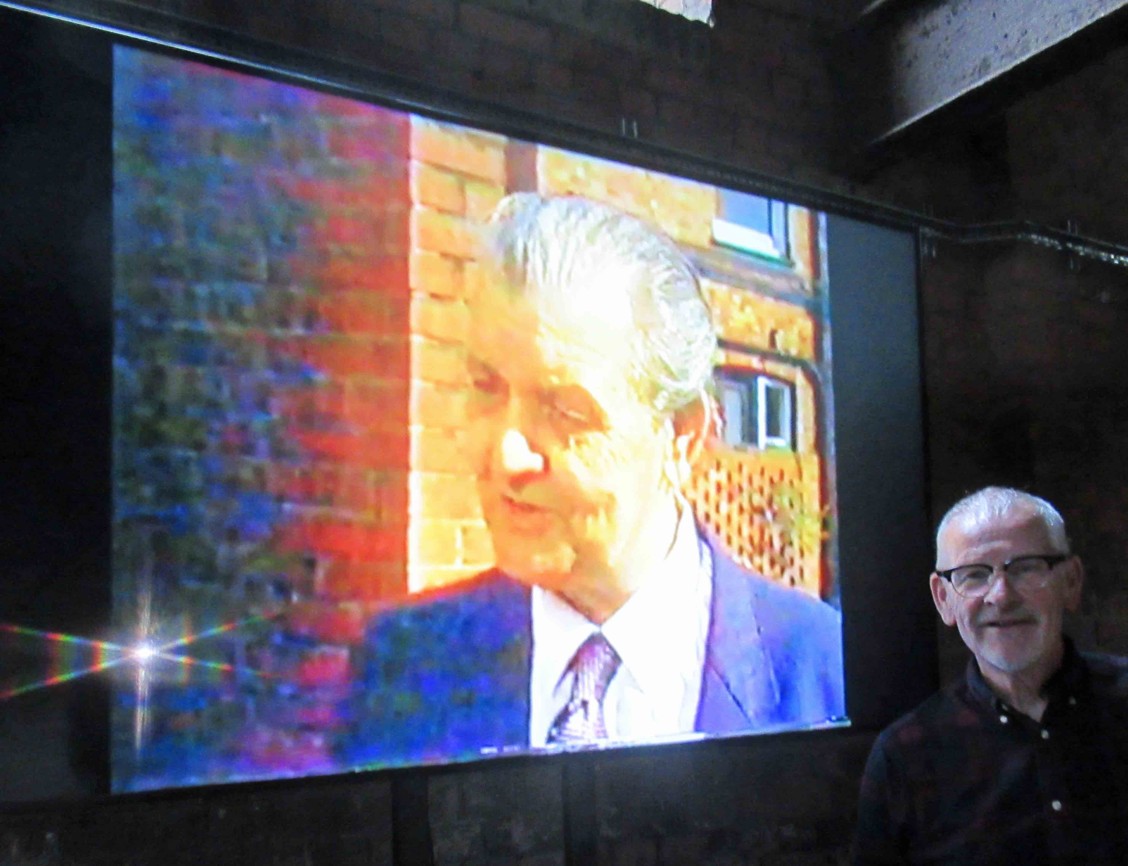
In the former boiler room they were showing a 26-minute film made for Thames TV in 1988. The episode features the plan to make the pumping station the rehearsal rooms for a major orchestra, a plan that did not come off. However, half of the video features Wapping pumping station including some steam plant and Don talking in detail about the operation of the pumping station. It is now on Youtube via the link below and is well worth the watching: www.youtube.com/watch?v=2C2SjiWo3WA
A fascinating visit but especially talking with Gerard and Matilda — a talk that we continued in the Prospect of Whitby! David Perrett
-
Gerard Donnachie and David Perrett in front of a surviving hydraulic pump, 6 June 2026; and Gerard Donnachie watching the video of his father in the pump house
Maldon, Essex — the London Tug SS Brent and a look at a bit of IA
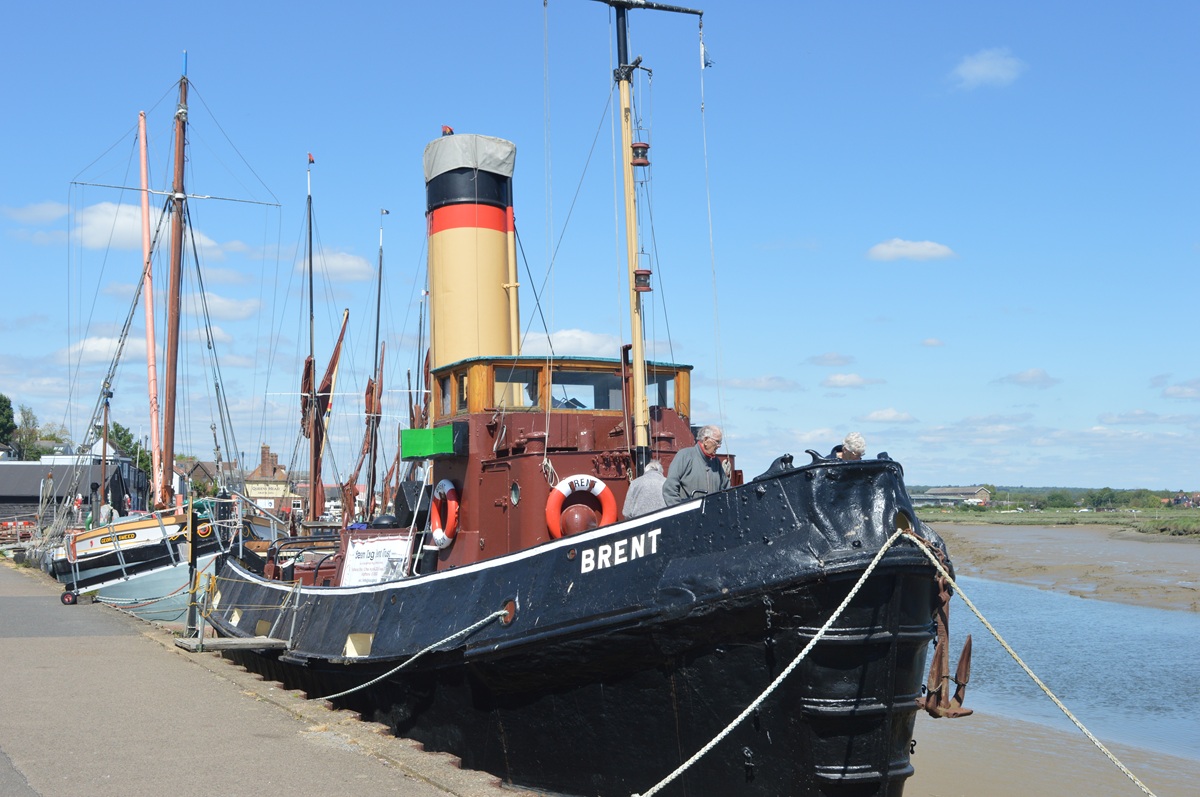
The SS Brent, permanently moored alongside The Hyde quay footpath, is a former London tug.
It has occasional open days, listed below, and can be seen alongside the mooring at any time. (Photo 1).
SS Brent, oil-fired with a compound steam engine, was built in 1945, one of 182 for the Ministry of War Transport. 'Named' TID 159, she was soon declared surplus and sold to the Port of London Authority, being given the name Brent. Her work was mainly towing barges and lighters around the London docks and Thames. Laid up in 1969 and sold for scrap in 1970 — and then acquired privately. She is now owned by a Trust which is working to restore her to working order.
During the summer there are several 'open days' for a self-guided tour (11.30 — 15.30, no booking needed), plus, at specific times on those days, a guided tour plus talk, total 1 hour, free, but booking required. The remaining dates for 2026 are: Sun, 30 Aug: guided tour 11.15; Sat, 12 Sept: talk & guided tour 14.00; Sun, 13 Sept: talk & guided tour 11.30 and 14.00; Sat, 29 Sept: talk & guided tour 11.15. There is no 'entrance fee' but donations are encouraged. Warning — if raining, no access as decks become slippery.
-
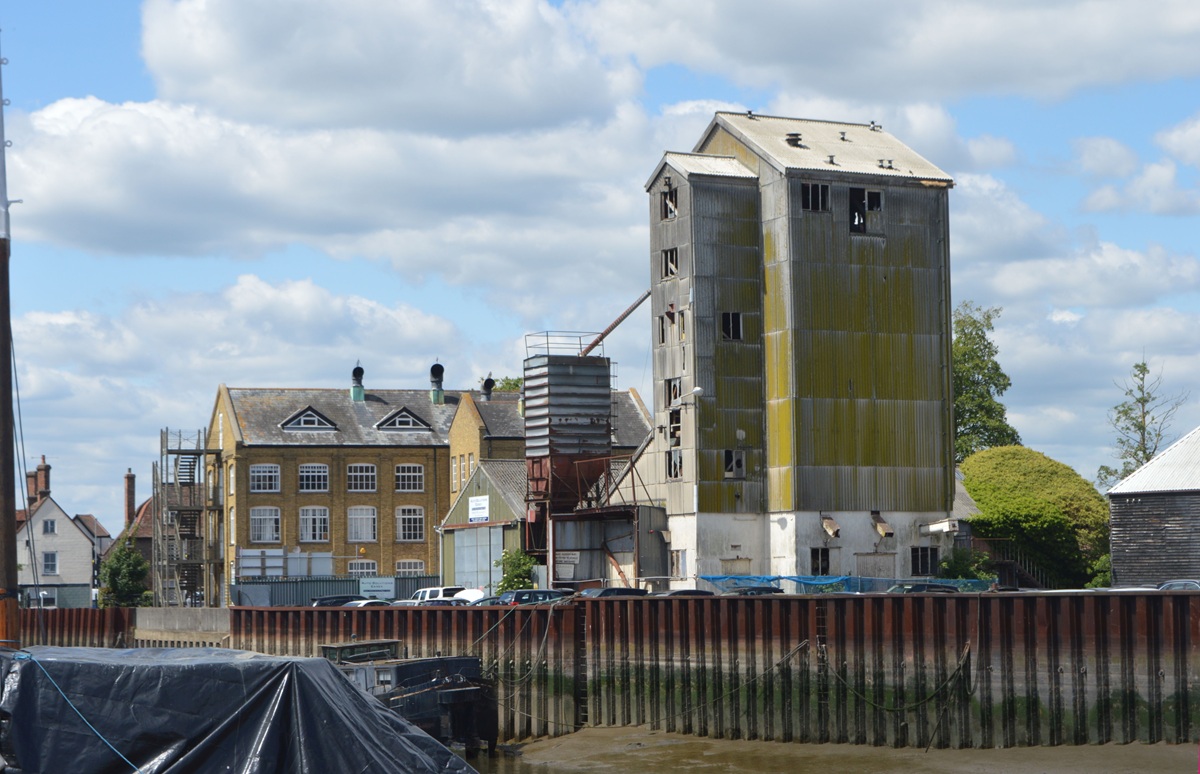
1. SS Brent; 2. Maldon riverside
If visiting Maldon to see SS Brent, there are several things nearby that might be included in a walk:
① Maldon Museum, 47 Mill Street, at the entrance to the Promenade Park, open 13-16.00 Wed, Fri, Sat & Sun from Good Friday until the end of September, then Sat & Sun only during the winter. Free.
② A walk northwards from SS Brent, mostly alongside, or parallel to, the River Chelmer, passes moorings for sailing barges. Continuing, across the river is the view of part-disused Carr's Flour Mill. (Photo 2).
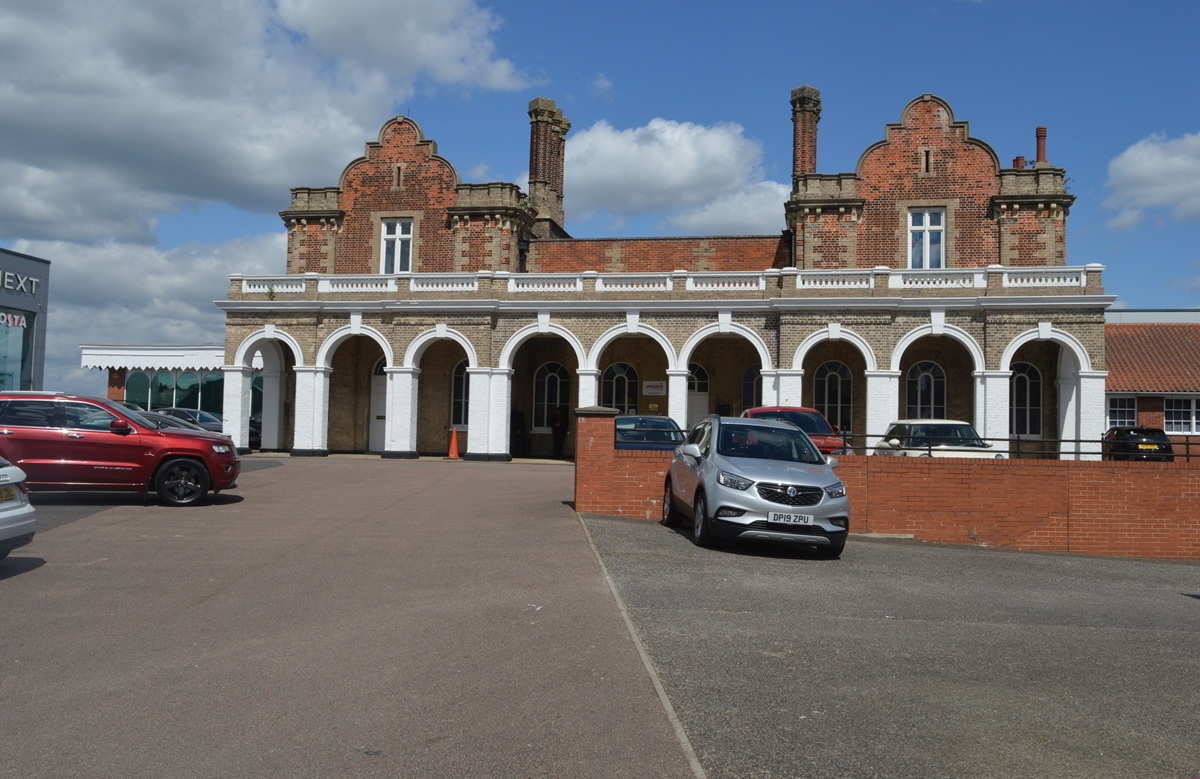
③ Cross the river bridge, heading north-east. On the right is the former Fullbridge Mill, converted into offices. Continuing, turn right into Station Rd. The quite imposing 1848 station entrance remains, now offices; closed 1964. (Photo 3)
④ Beyond the station is the Combined Military Services Museum, open 10.30 to 17.00, Weds to Sun. Pre-booking advised (₤9.50, ₤8.50 conc). Between the two is the concrete façade of a 1930s garage/workshop.
⑤ Return to the main road and continue. On the left is the former Maldon Ironworks, makers of agricultural machinery 1875-1955.
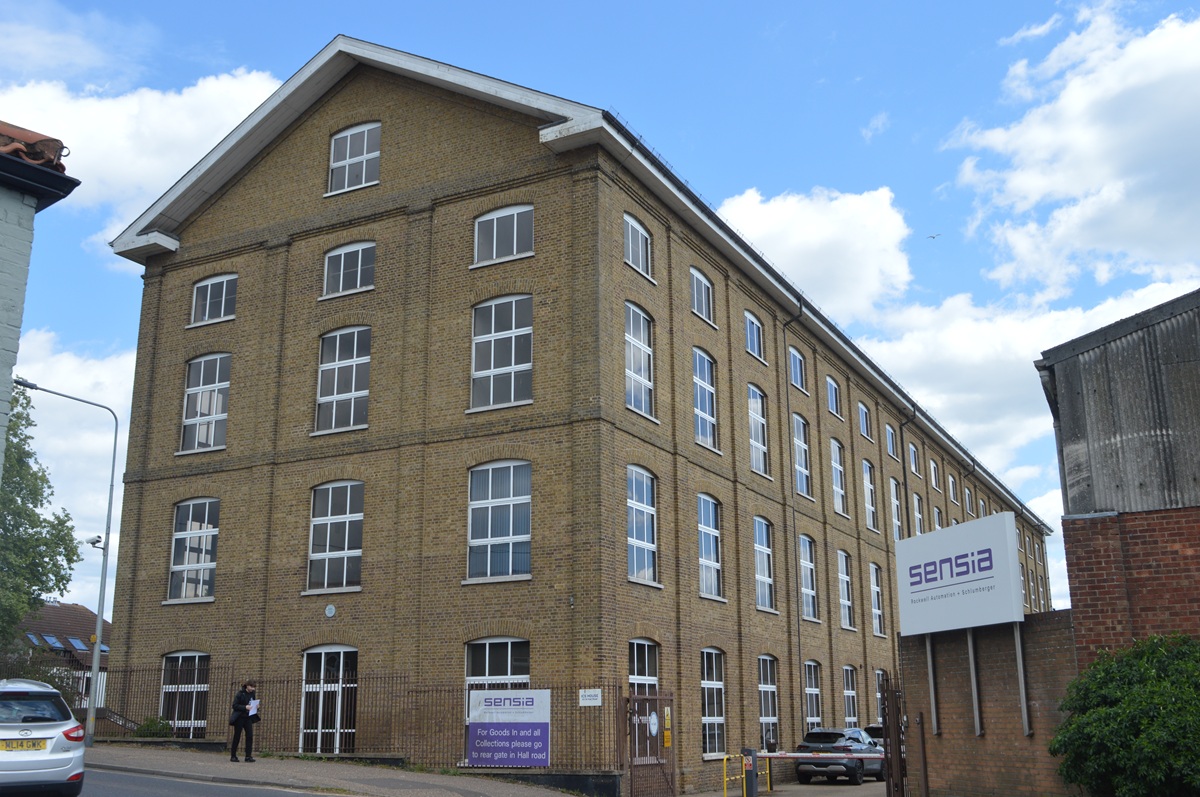
⑥ Continue along The Causeway, bearing left as it joins The Square then Holloway Road. On the right is the four-floor Bentall's factory, 1866, also for agricultural machinery. (Photo 4). The firm diversified into mechanical engineering, including a stab at motor cars. Taken over as part of the Acrow group in 1961, it closed in 1984. Ahead, across the road bridge, to get a waterside view of the factory, is access to the towpath of the Chelmer & Blackwater Navigation. This runs (flows?) between Chelmsford and, about 2 miles distant, Heybridge Basin. David Thomas
-
3. Maldon station; 4. Bentall & Co factory